 Unofficial fan project
The Mets Powerhouse
Darryl Strawberry
Right fielder · Mets 1983–1990
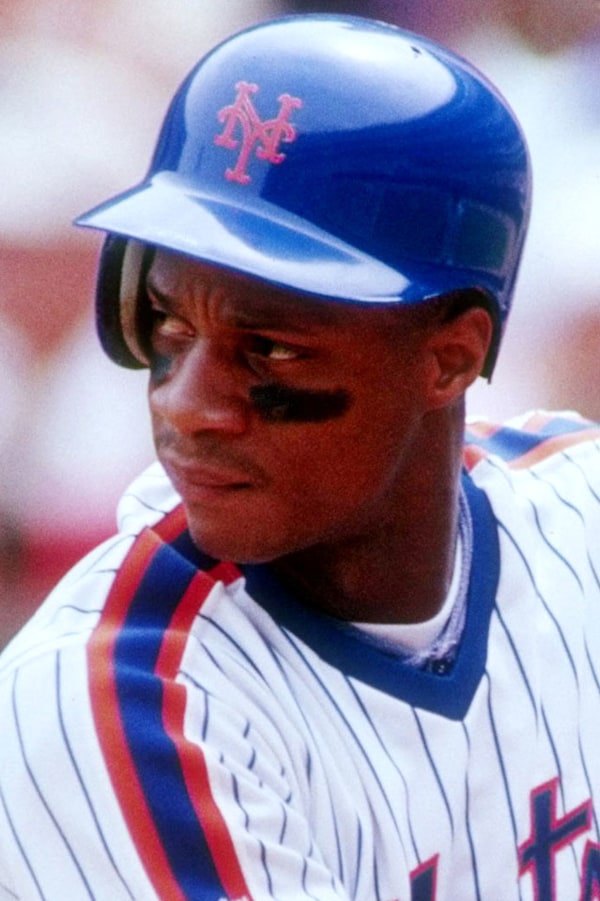
The part fans remember
What the numbers leave out.
Strawberry made home runs look easy and the 1980s Mets look dangerous. When he was locked in, there was no hitter in the lineup opponents feared more.
The Mets drafted Strawberry first overall in 1980 and expected him to become the star of their next good team. He won Rookie of the Year in 1983, just as the franchise began climbing out of the bottom of the standings. His swing looked effortless, but the result could be a ball landing in Shea’s upper deck. He gave the young Mets a kind of power they had never had before.
Strawberry was an All-Star every year from 1984 through 1990. He helped win the 1986 World Series, hit 39 home runs in both 1987 and 1988, and finished second in the 1988 MVP vote. He could steal bases too, which made him more than a one-skill slugger. When he was locked in, there was no hitter in the lineup opponents feared more.
The difficult part is that his Mets story ended too early. Problems away from the field followed him, and he left for Los Angeles after the 1990 season while still in his prime. Fans can celebrate what he did and still wonder what the all-time record book would look like if he had stayed healthy and remained a Met. His retired number honors both the greatness and the lasting bond.
The honest version
The best stretch
Strawberry’s 1986–88 peak made him the most dangerous power hitter the Mets had ever developed. The tall stance, high leg kick, and long left-handed swing produced home runs that seemed to rise forever toward Shea’s upper deck. He could also run and throw, which made him more than a one-skill slugger. In 1988 he had 39 homers, 29 steals, and a second-place MVP finish for a 100-win team.
The part that got messy
The complete Strawberry experience included excitement and frustration. He could change a game in one swing, but slumps, strikeouts, injuries, and problems away from the field kept his career from matching the enormous expectations. On the 1986 club he was one star among many, yet his power gave the lineup its most frightening threat. His home runs in Games 6 and 7 of the World Series helped finish the championship run.
Why fans still care
For years, Strawberry held the Mets’ career home-run record and stood as the great example of homegrown power in Queens. Pete Alonso eventually passed the number, but not the memory of how Strawberry’s shots looked leaving Shea. His story will always carry a sense of unfinished possibility. It also carries a championship, eight seasons of real production, and a swing that Mets fans can recognize before the ball even reaches the plate.
Strawberry looked built for Shea Stadium. That long swing sent baseballs into places few Mets had ever reached, and every trip to the plate felt dangerous. His story is not as clean as the home-run totals; the lost time and unrealized possibilities still linger. But when fans picture the swagger and power of the 1980s Mets, they picture number 18 turning on a pitch.
Signature Mets momentThe longtime franchise home-run leader and a central bat on the 1986 champions.
The short list
The stuff worth remembering.
- 011983 NL Rookie of the Year
- 02Seven Mets All-Star selections
- 031986 World Series champion