 Unofficial fan project
Seaver, the Miracle, and Two Pennants
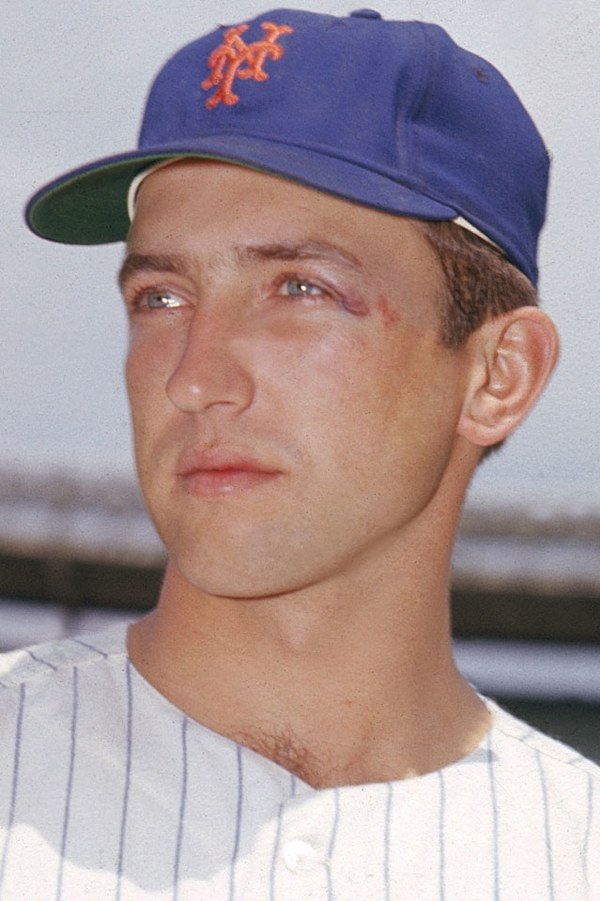
Jerry Koosman
Starting pitcher · Mets 1967–1978
The part fans remember
What the numbers leave out.
Seaver got the headlines, but Koosman was right there beside him. He took the ball in the biggest games of 1969, helped finish the miracle, and kept pitching through years when the Mets gave him very little margin for error.
Koosman arrived for good in 1968 and nearly won Rookie of the Year after going 19–12 with a 2.08 ERA. That season gave the Mets two young starters—Koosman and Seaver—who could match almost anyone. When the team made its miracle run a year later, Koosman was not standing behind Seaver. He was right beside him.
He won Game 2 of the 1969 World Series and then took the ball again in Game 5 with the championship waiting. Koosman pitched a complete game, drove in the tying run with a groundout, and was on the mound when Cleon Jones caught the final out. He helped win another pennant in 1973 and later won 21 games for a 1976 club that did not give him much room for error.
By the time the Mets traded him after 1978, Koosman had spent more than a decade doing heavy work for the franchise. His 140 Mets wins and huge October starts finally received a permanent honor when number 36 was retired. The retirement felt overdue, which is often the case with players who made excellence look steady instead of dramatic.
The honest version
The best stretch
Koosman’s peak began with one of the best rookie seasons in team history. In 1968 he won 19 games with a 2.08 ERA, giving the Mets a left-handed ace beside Seaver. He never received the same level of attention, but the pair made the team’s rise possible. Koosman attacked hitters, handled heavy workloads, and remained excellent long enough to help lead two very different Mets teams to the World Series.
The part that got messy
His greatest work came in 1969. Koosman won Games 2 and 5 of the World Series, taking a shutout into the late innings of the clincher and getting the final out himself. Four years later, he again pitched in October as the 82-win Mets pushed Oakland to Game 7. Those performances are why describing him only as Seaver’s partner misses the point. Koosman was a true big-game pitcher on his own.
Why fans still care
He spent his final Mets seasons receiving poor run support on clubs sliding toward the bottom of the standings. That lowered his win totals and allowed later generations to overlook him. A better view sees 140 Mets wins, more than 1,700 strikeouts, two pennants, and a championship clincher. Koosman was not the face of the Miracle Mets, but the miracle does not happen without him.
Koosman sometimes gets treated like the other pitcher next to Seaver, which badly undersells him. He was a genuine ace, a 20-game winner, and the man on the mound when the Mets became champions. His Game 5 performance in 1969 gave the miracle its final chapter. On almost any other franchise, 140 wins and two pennants would make him the unquestioned pitching icon.
Signature Mets momentWinning pitcher in the deciding Game 5 of the 1969 World Series.
The short list
The stuff worth remembering.
- 011969 World Series champion
- 021973 National League champion
- 03140 Mets wins