 Unofficial fan project
Piazza, Alfonzo, and the Return to October
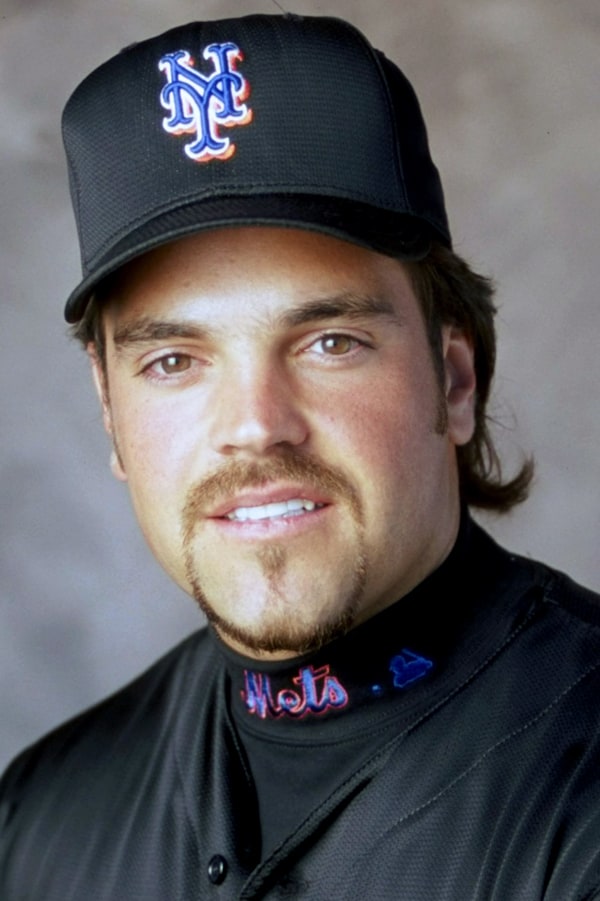
Mike Piazza
Catcher · Mets 1998–2005
The part fans remember
What the numbers leave out.
Piazza arrived during a strange week and quickly became the biggest star the Mets had in years. His swing changed the lineup, changed Shea, and made the Mets feel important again.
Piazza arrived in May 1998 after a strange week in which the Dodgers traded him to Florida and the Marlins quickly sent him to New York. At first, the pressure showed. Fans booed when he struggled, rumors said he might leave, and every at-bat felt like a test. Then he stayed, signed a long-term deal, and became the superstar the Mets had been missing.
His power changed the lineup. Piazza drove the 1999 team to the playoffs, helped win the pennant in 2000, and produced huge home runs that made Shea shake before the ball landed. Even the difficult moments—the broken-bat incident with Roger Clemens and the Subway Series loss—felt enormous because Piazza had made the Mets part of baseball’s main story again.
Nothing, however, carries the weight of September 21, 2001. In the first major sporting event in New York after the attacks, Piazza hit a late go-ahead homer and gave the crowd a moment to release weeks of pain. That home run became bigger than a season. It is why his Mets story belongs to the city as much as it belongs to the record book.
The honest version
The best stretch
Piazza’s 1998–2000 peak changed the mood around the Mets. The 1998 trade brought a true superstar to Queens, and after a difficult first few weeks he began carrying the middle of the lineup. His opposite-field power was extraordinary for any hitter and almost impossible for a catcher. By 1999 and 2000, every late inning at Shea seemed to be waiting for number 31 to walk toward the plate.
The part that got messy
His Mets story contains both joy and pain: the 1999 playoff battles, the 2000 pennant, the broken bat thrown by Roger Clemens, and the World Series loss to the Yankees. Then came September 21, 2001. Piazza’s eighth-inning home run in the first major sporting event back in New York after the attacks carried a meaning no statistic can hold. For one night, a baseball swing gave a grieving city permission to cheer.
Why fans still care
Piazza was not homegrown, but he became completely tied to the Mets. The trade rescued the franchise from drifting, helped produce consecutive playoff teams, and gave fans a Hall of Fame star in his prime. His defense was debated and his body wore down, yet his bat and presence made the Mets matter nationally again. The retired number and Hall of Fame plaque only confirm what Shea already knew.
Piazza made the Mets feel important the instant he arrived. Every at-bat carried the possibility of a home run, and his presence turned a good late-1990s team into a real contender. The September 21, 2001 homer means something larger than baseball, but fans also remember the countless line drives, curtain calls, and games when Shea waited for number 31 to rescue the night.
Signature Mets momentHis home run in the first game at Shea after September 11 remains a defining Mets moment.
The short list
The stuff worth remembering.
- 012000 National League champion
- 02Seven Mets All-Star selections
- 03National Baseball Hall of Fame