 Unofficial fan project
The Mets Powerhouse
Dwight Gooden
Starting pitcher · Mets 1984–1994
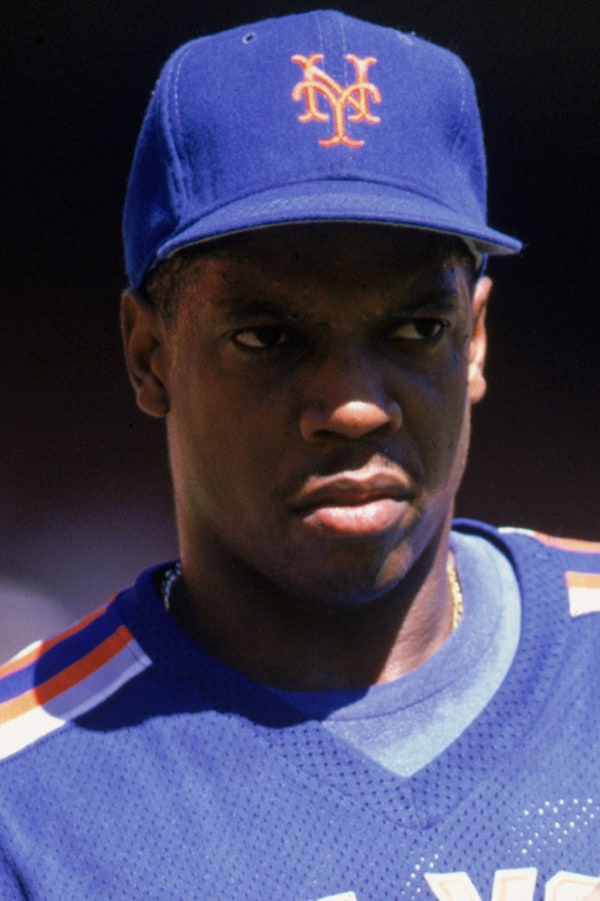
The part fans remember
What the numbers leave out.
Doc arrived at 19 with a fastball and curve that made hitters look completely overmatched. For a few years, every Gooden start felt like an event—and 1985 still looks almost impossible.
Gooden reached the majors in 1984 at only 19 and made every fifth day feel different. The fastball jumped, the curveball disappeared, and National League hitters struck out 276 times while he won Rookie of the Year. In 1985 he went 24–4 with a 1.53 ERA and 268 strikeouts, one of the greatest pitching seasons baseball has ever seen.
By 1986, Doc was the young star at the front of a champion’s rotation, but his story was already becoming more complicated. The Mets won the World Series, yet Gooden struggled in his Series starts, missed the parade, and later lost time because of drug problems. He still had excellent seasons afterward, including a 19-win year in 1990, but the almost impossible level of 1985 never fully returned.
That is why fans talk about Gooden with both joy and sadness. They remember the strikeouts and the huge K signs hanging at Shea, while also wondering how much more his talent might have produced. His number 16 is retired because the greatness was real, even if the story did not follow the smooth path everyone expected.
The honest version
The best stretch
Gooden’s 1984–86 peak was baseball at its most electric. As a 19-year-old rookie he struck out hitters with a fastball that seemed to jump and a curveball that disappeared. A year later he went 24–4 with a 1.53 ERA and 268 strikeouts, winning the pitching Triple Crown and the Cy Young Award. Shea did not simply get louder on Doc’s starts; the whole building felt as if it were waiting for something historic.
The part that got messy
The difficult part of Gooden’s story is that the greatness arrived so early that it looked permanent. Drug problems and injuries interrupted what might have become one of the greatest pitching careers ever. He was still a valuable Met for years, but the impossible level of 1985 never fully returned. Fans could celebrate what he did while also wondering what else might have been there if his life and health had followed a kinder path.
Why fans still care
Doc remains loved because his story contains more than regret. He was a homegrown teenage sensation, an essential part of a champion, and the pitcher who made an ordinary summer night at Shea feel important. His later struggles were painfully public, but so were his recoveries and his return to the Mets family. When his number was retired, the cheers honored both the unhittable young ace and the person who survived everything that followed.
For a short time, Doc made hitters look helpless and Mets fans plan their week around his starts. The curveball was unfair, the fastball exploded, and 1985 still reads like something from another sport. His career also carries sadness because everyone could see how much more might have been there. That mix of brilliance and heartbreak is part of why he remains so deeply connected to Mets history.
Signature Mets momentA 1.53 ERA, 24 wins, and the pitching Triple Crown in his 1985 Cy Young season.
The short list
The stuff worth remembering.
- 011984 NL Rookie of the Year
- 021985 NL Cy Young Award
- 031986 World Series champion